Nicotine Is Not Your Friend
Addiction trains the unconscious mind to treat nicotine as “relief.” Recovery gets easier the moment your deeper mind stops protecting nicotine and starts seeing it as the enemy — the obstacle between you and a calm, quiet mind.
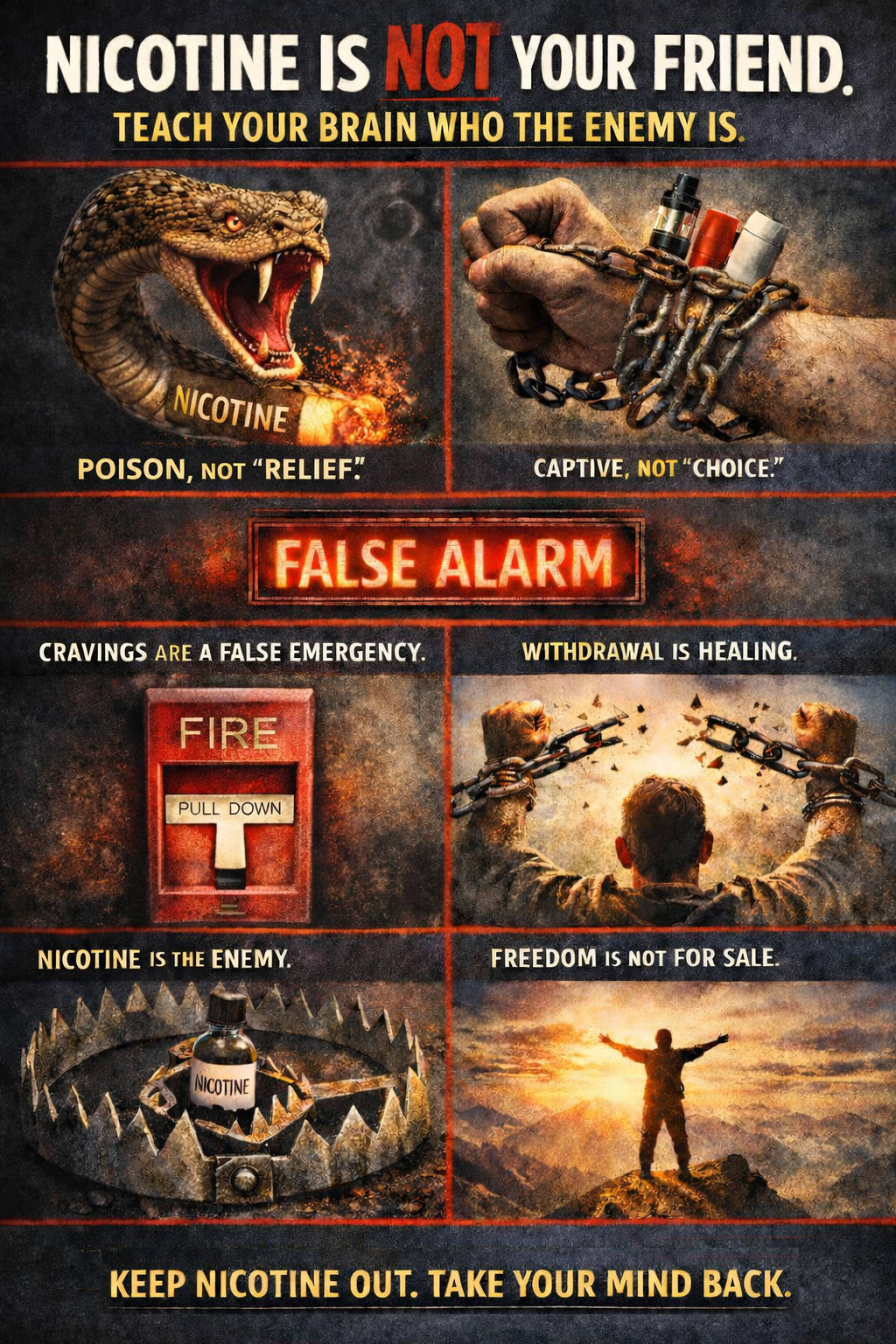
The unconscious mind doesn’t debate nicotine. It labels it. For many users, nicotine has been subconsciously categorized as a “friend” — a comfort object, a rescue, a regulator. That is addiction’s greatest trick.
There’s a part of you that doesn’t negotiate or write plans. It scans — fast — asking one question: “Am I safe?” When nicotine levels drop, that system can misfire and call it an emergency.
Key re-label
- The danger isn’t nicotine’s absence. The danger is nicotine’s control.
- Cravings are a false emergency. A craving is your addiction begging — a loud signal, not a true need.
- Withdrawal is healing. Discomfort is not proof you need nicotine; it’s often proof your body is recalibrating.
Nicotine creates discomfort — then sells itself as the cure. It’s an arsonist offering “relief” from the fire it started. That’s why the addicted mind so easily blames “being without nicotine,” instead of blaming being addicted to nicotine.
The goal here isn’t fear. The goal is clarity: stop treating poison as protection. Once nicotine is correctly labeled, urges lose authority. You’re no longer arguing with yourself.
If this message hits home, keep it close. The task is simple: keep nicotine out. Long enough for quiet to return. Long enough for your mind to remember what calm feels like without chemical negotiation. The next topic continues building the same skill: protecting recovery from relapse-triggering cues and permission slips.
References
- Spitzer, J. “My Cigarette, My Friend.” (reframing nicotine from ally to adversary). whyquit.com