Sleep & Wake Windows
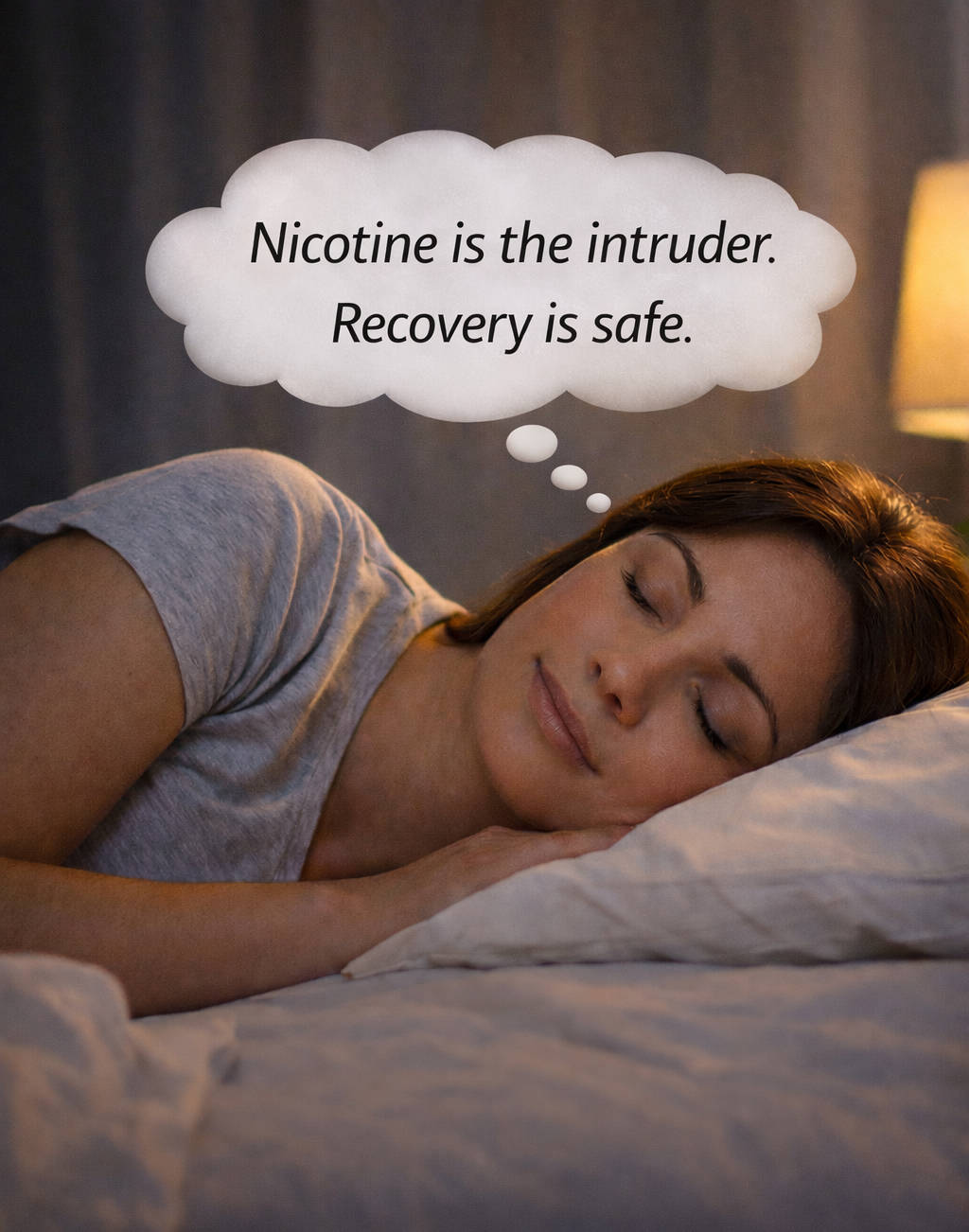
The minutes just before sleep and just after waking are often quieter, with fewer distractions and less mental debate. These “drowsy windows” can help the brain’s alarm system correct a simple mislabeling: nicotine is the intruder; recovery is safe.
This idea builds on the Team Switch described in Chapter 10, which directly addresses the survival brain and helps the amygdala switch teams — beginning to see nicotine use as danger, rather than withdrawal and recovery.
Amygdala-facing language uses short, factual statements that signal safety and remove the need to act, rather than explaining or persuading.
This isn’t mystical “reprogramming,” and it isn’t a promise of comfort. It’s practical threat re-labeling. In drowsy states, the mind tends to argue less, and short, honest labels can land with less resistance.
What this is (and what it isn’t)
- Not comfort-seeking: you are not trying to force a feeling.
- Not denial: sensations can be real and still be non-dangerous.
- Not a ritual: one sentence repeated softly is enough.
- Yes, a correction: you’re teaching the alarm system what “safe” means.
Why these windows can help
The survival brain updates by association, not reasoning. When nicotine-free sensations occur and no harm follows, the alarm system slowly revises what it considers dangerous.
Sleep and waking windows help because simple, non-debatable labels can be repeated without argument. The goal is not to “win” against the feeling. The goal is to remove urgency’s authority.
Key re-labels
- Recovery is safe. Different does not mean dangerous.
- No action is required. You can let the signal pass without responding.
- Nicotine is the intruder. The threat is the drug, not its absence.
- Craving is a false alarm. Loud is not the same as true.
Keep it short
Drowsy windows are not the time for analysis, bargaining, or long self-talk. Pick one line that is true on every day of recovery. Repeat it softly once or twice. Then stop.
One-sentence anchors (truths, not promises)
- “Nicotine is the intruder. Recovery is safe.”
- “An urge is a false alarm. No action is required.”
- “Urgency feels dangerous, but it isn’t.”
- “Nothing new is wrong. Old nicotine signals are fading.”
- “Nicotine created the discomfort it appeared to fix.”
- “Withdrawal and recovery are healing, not harm.”
If you want the most amygdala-facing anchor, use: “Recovery is safe. No action is required.”
Avoid these common traps
- Predictions: “Tomorrow will be easy/calm.” (If the body disagrees, the mind pushes back.)
- Debates: long reasoning chains at night (they keep the alarm engaged).
- Checking: scanning to see if you feel calm yet (it keeps attention on threat).
Coping strategies
This topic was about how the minutes before and after sleep can be used to correct false alarm system danger signals. The balance of the chapter focuses on nicotine use conditioning, with step-by-step tools on how on how to navigate urges, anxiety spikes, and nicotine-use permission thoughts. Here are key links, if feeling challenged now: